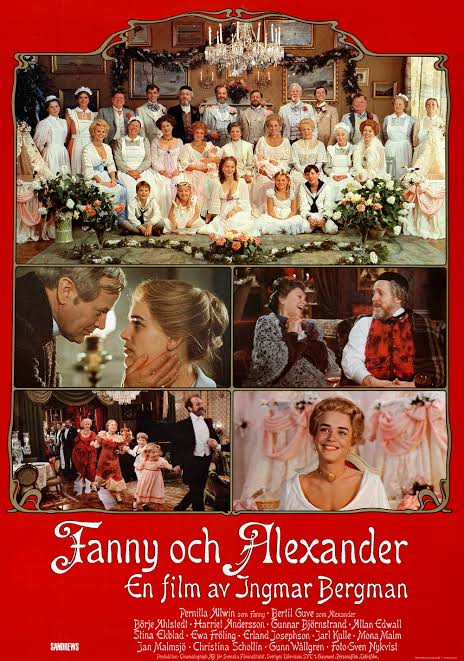
FANNY AND ALEXANDER | Ingmar Bergman | Sweden, 1982
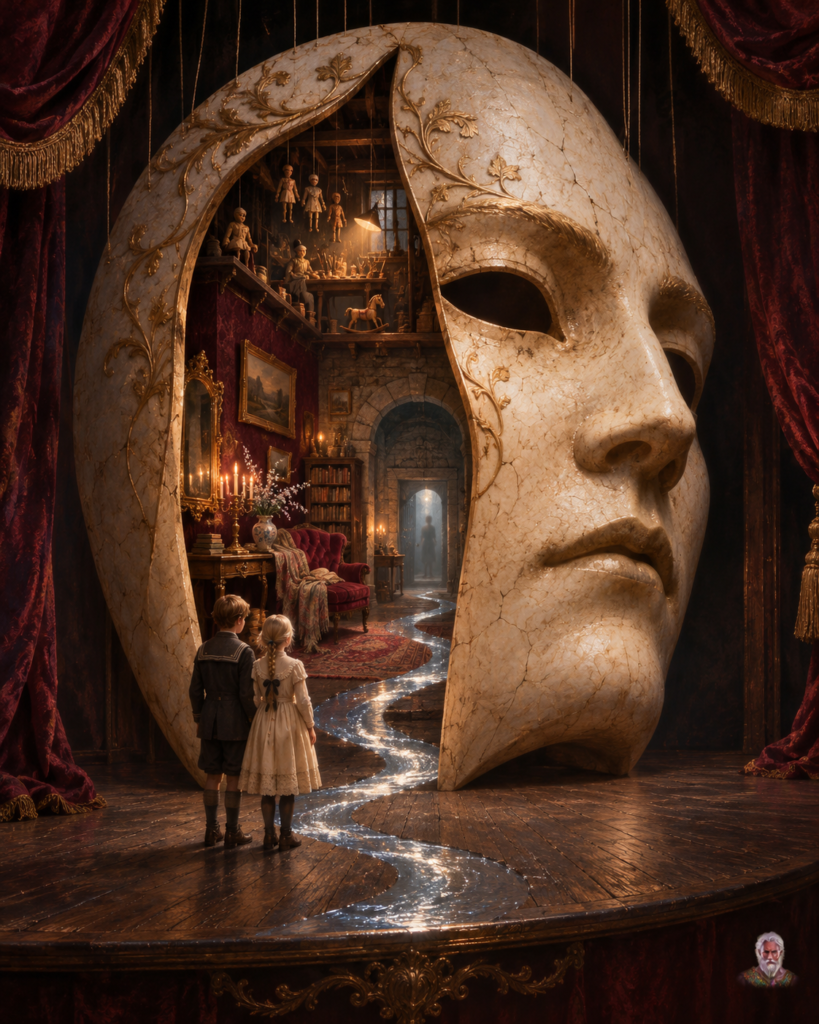
Three houses. One river. A mask that cannot be removed.
Bergman’s Fanny and Alexander explores how beauty sustains us, authority haunts us, and imagination changes what is possible.
A reflection on the worlds we inhabit and the selves they make.
After their father’s death, two children leave a theatrical household for the rule of an austere bishop. Family, cruelty and imagination intertwine in a world where the dead remain present.
Watching this film (Suggested by ChatGPT as related to the themes of O Tranquil Soul), I kept returning to three houses and the river flowing between their worlds.
Here are a few remarks on this beautiful, slow, intricate piece by Bergman…
Beauty as belonging: The Ekdahls’ furniture, paintings, fabrics, food and theatre hold accumulated memory and possibility. Through Cultural Resource Sets, we see artifacts, meanings and identities sustaining one another. Gustav’s defence of the “little world” (the ‘in here’ as opposed to the ‘Big World’, out there) makes tenderness a vocation, although comfort also shelters vanity.
The mask that becomes flesh: The bishop demands subtraction: possessions, play, competing interpretations. Emilie, weary of theatrical roles, mistakes his rigidity for depth. His confession that his mask cannot be removed echoes The Mask Is the World: the symbols we inhabit can become selves we cannot escape… Yet the world always finds a way to change the mask…
Imagination’s dangerous freedom: Isak’s house restores multiplicity through masks, puppets, antiques and magical passages. A chest carries the children to freedom; matter becomes deliverance. A puppet impersonates God, yet exposed strings leave other mysteries intact. The androgynous Ismael [ “Perhaps we are the same person.” ] toys with identity and blurs self and other (is this what an oracle must be?), bringing Alexander’s murderous wish uncannily close to the bishop’s death. Creation carries consequences.
The ghosts we carry: Oscar plays Hamlet’s father before becoming a ghost himself, unable to protect his children. The drowned daughters terrify; the dead bishop threatens again. Grief, guilt and internalized authority survive their sources. The river suggests life exceeding its enclosures while holding the memory of drowning. Beside Alexander’s visions, Fanny offers companionship.
Returning with agency: “Everything can happen…” Helena’s closing reading opens the world again. Emilie returns ready to shape the little world. She proposes Strindberg’s A Dream Play, with Helena’s shawl anticipating its Doorkeeper. A divine daughter enters human suffering: I read this as transcendence returning through compassion. The opening miniature theatre finds an answering image in a grandmother reading a world into being. Ingmar Bergman
Worlds that act upon us: As in O Tranquil Soul, stories become environments, symbols acquire agency, and created worlds can imprison their creators. Beauty keeps meanings available for transformation.
The little world’s deepest task is to remain spacious enough for what it cannot explain: a child, a book, the living and their ghosts.