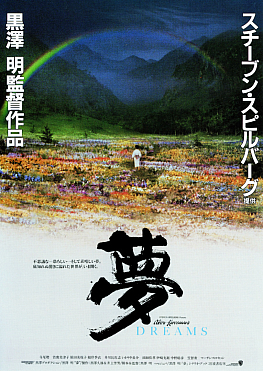
Keywords: Dreams, Symbolism, Folklore, Beauty, Art, War, Hierarchy, Mortality, Tranquility.
The eight dreams, in sequence: (1) Sunshine Through the Rain; (2) The Peach Orchard; (3) The Blizzard; (4) The Tunnel; (5) Crows; (6) Mount Fuji in Red; (7) The Weeping Demon; (8) The Village of the Water Mills.
Impressions
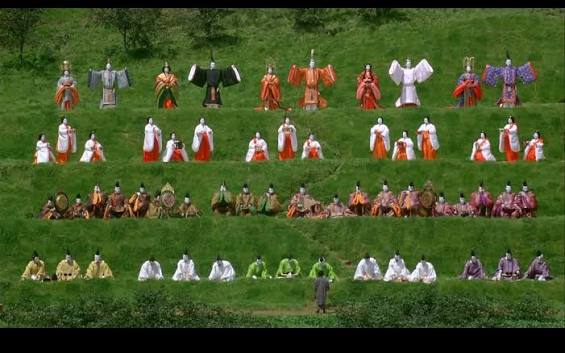
Eight beautiful, fantastical vignettes, some visually extraordinary, particularly the peach orchard and the watermill village. Kurosawa combines folklore, personal dreams, art, memory, and moral reflection. The messages occasionally feel naive or didactic, but the film offers moments of enduring wisdom.
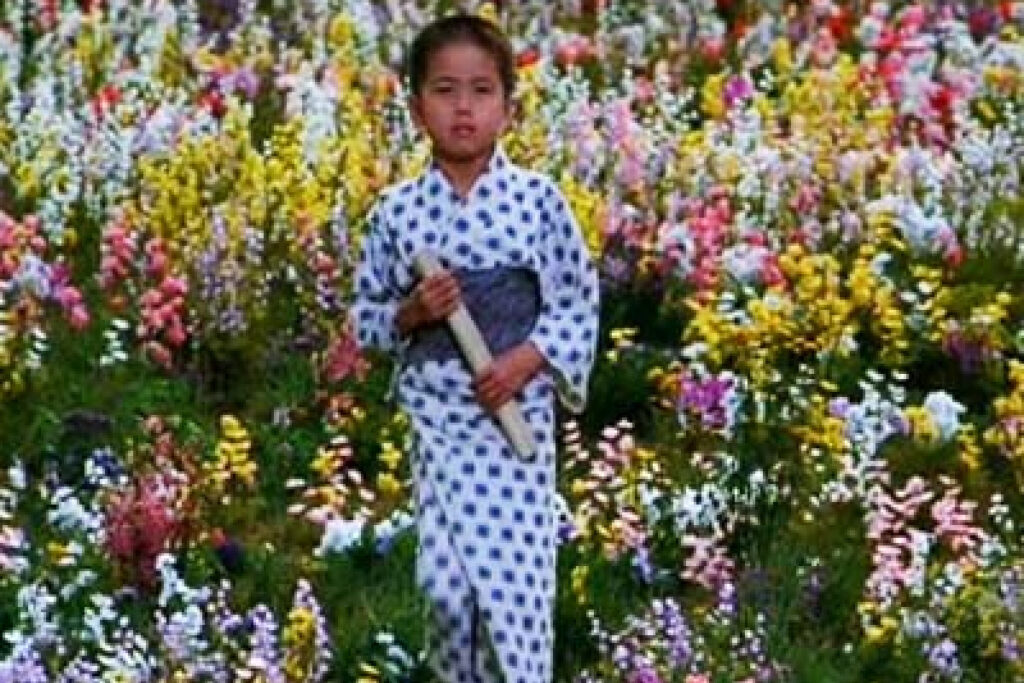
The peach orchard is especially rich: ceremonial symbols survive the destruction of the living trees they once celebrated. At the watermill village, children continue placing flowers at a stranger’s grave, although generations have forgotten why. Culture preserves meaning beyond memory, but it can also preserve empty forms, beautiful in themselves.
Memorable dialogue and reflections
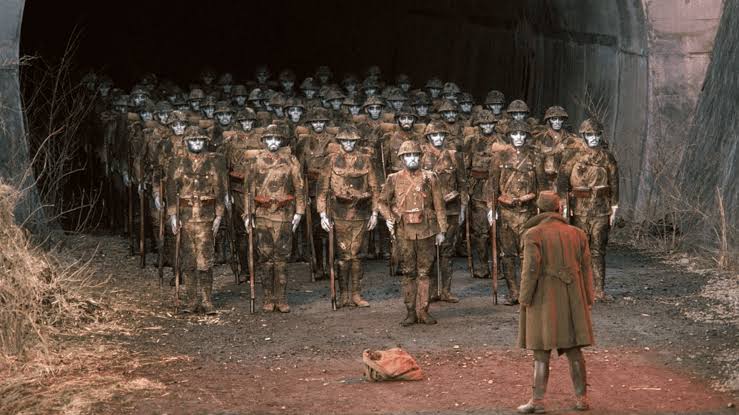
The Tunnel: Responsibility, war, and cowardice.
The commander confronts his dead soldiers and acknowledges that he could blame the absurdity of war or the inhumanity of the military for their deaths. Yet he refuses to use those explanations to evade his own responsibility:
“But to deny my own mistakes and indecisiveness would be cowardly.”
A profound recognition that systemic wrongdoing does not absolve the individual of responsibility.
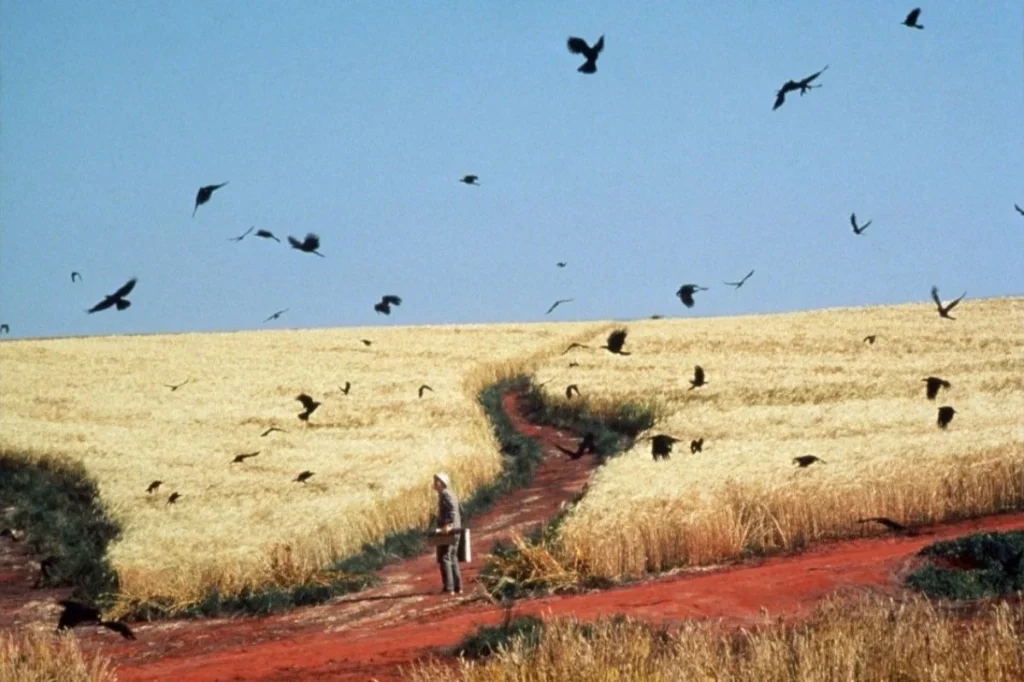
Crows: Beauty and the compulsion to create.
Van Gogh, encountered inside the world of his paintings, declares:
“A scene that looks like a painting doesn’t make a painting.”
“I work, I slave, I drive myself like a locomotive!”
Beauty requires a way of seeing, and creativeness transforms the encounter with the world into something that did not previously exist. The artist absorbs his surroundings, struggles to contain them, and is compelled to work.
The Weeping Demon: The persistence of hierarchy.
Even after humanity has destroyed its world, the demons reproduce its inequalities:
“Even here, we have grades.”
“Before, they were powerful and pretentious. And now they still throw their weight around as demons.”
The powerful remain powerful, the weak are devoured, and immortality becomes a terrible punishment. Human systems and their injustices survive even the destruction of their original world.
The Village of the Water Mills: Convenience, nature, and living well.
The old man questions the modern obsession with convenience:
“People are suckers for convenience.”
“…they end up throwing out what’s truly good.”
And, discussing electricity:
“Night is supposed to be dark.”
The village’s joyful funeral suggests another kind of progress, measured not by control or convenience, but by the quality and completeness of a life.
Connection with O Tranquil Soul
Like Mir’s journeys through Grumis, these are encounters with different symbolic worlds, each offering a particular perspective on existence. The episode Crows, in which the observer literally enters a painting, is an especially striking counterpart to the living literary worlds of OTS.
Both works examine what it means to create, to bear responsibility, and to encounter the boundaries of life and death. Kurosawa often turns these encounters into direct parables; OTS explores them through an interconnected narrative and its shifting boundaries between reader, creator, and character.
A lingering question: Does tranquility come from overcoming the world, or from learning to accept its mysteries without surrendering responsibility?