
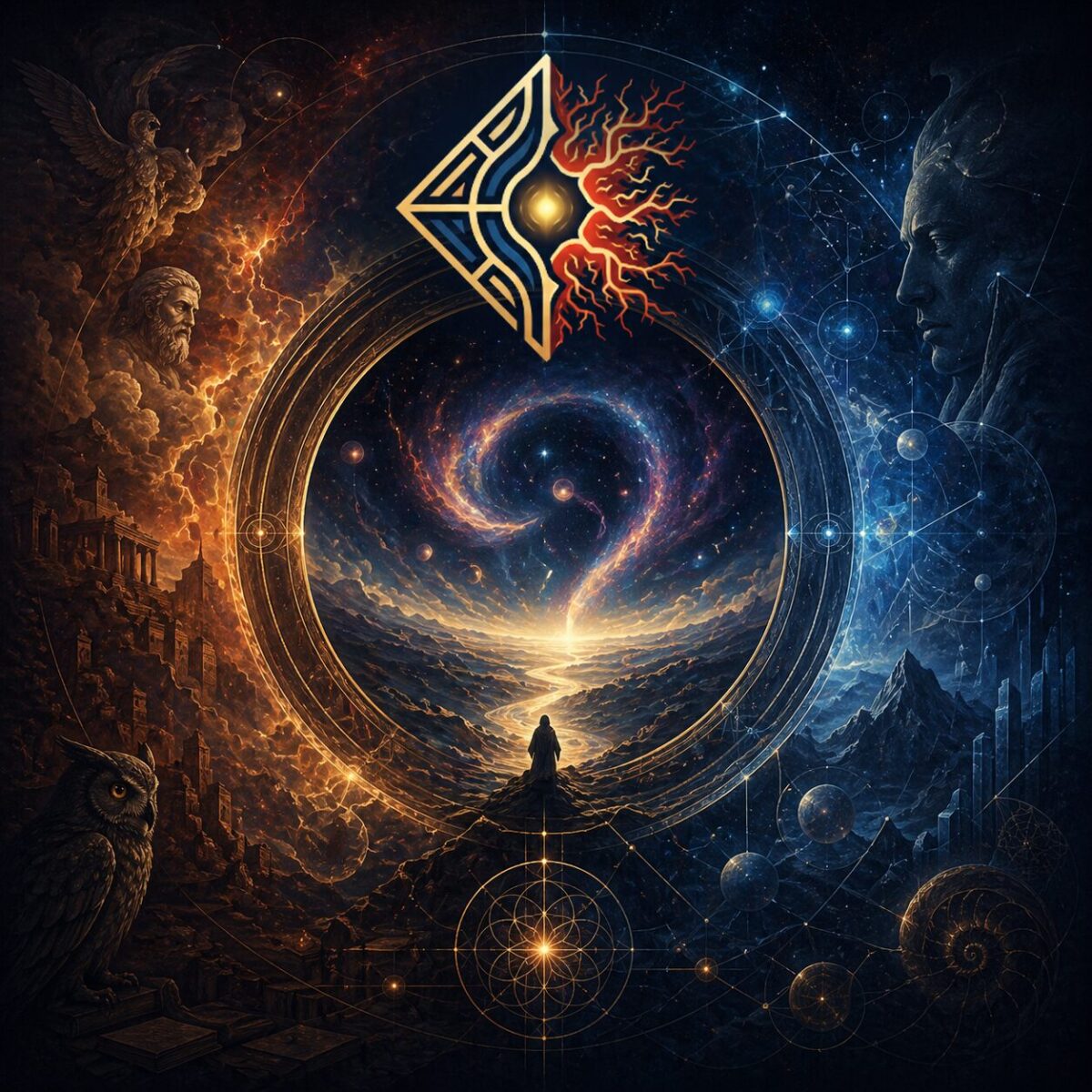
The Edge of Knowledge is a complexity and creativity course about uncertainty, incompleteness, approximate thinking, beauty, chaos, and emergence — and what these ideas mean for thinking at the limits, creating, and acting wisely.
(Or) Explore The Atlas of Worldly Wisdom:
The Mysterious Essence of the World
In a world that refuses to be fully known, we should stop to ask the bigger questions:
- Why do models keep failing?
- Why is reality so resistant to clean explanation?
- Why does creativity so often arrive at the edge of what we understand?
- What does any of this mean — for my work, my decisions, my life?
The Edge of Knowledge course is a short, idea-rich course exploring six boundaries of knowledge — and what they mean for creativity, work, identity, ethics, and the art of living wisely.
It is the more contemplative companion to The Atlas of Worldly Wisdom: where the Atlas asks “What should I do now?”, The Edge asks the deeper question: “Why is the world so difficult to know, predict, and control in the first place?”
TLDR;
The Edge of Knowledge is an intellectual expedition.
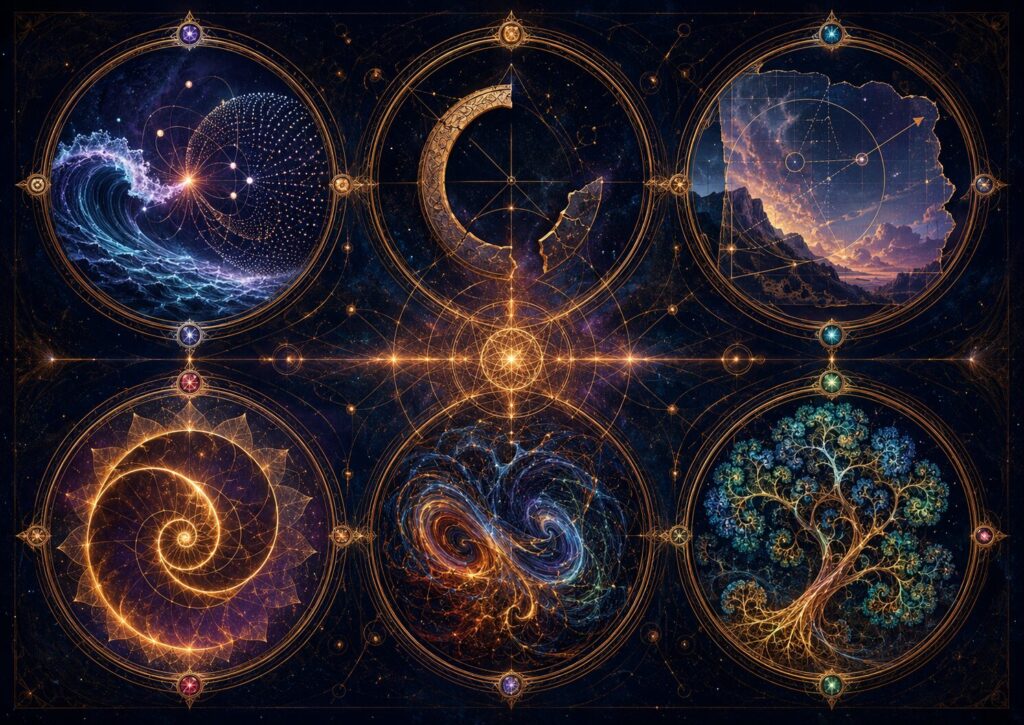
It explores and integrates the insights around six foundational truths:
- Reality itself is uncertain.
- Knowledge is eternally incomplete.
- Approximation is what we do.
- Beauty is a moving synchronicity.
- Non-linearity breaks simple prediction.
- The amazing emerges from many simple interactions.
The course serves as a theoretical background to The Atlas of Worldly Wisdom, helping learners understand the deeper logic behind uncertainty, incompleteness, creativity, complexity, and the AIC framework.
Start The Edge of Knowledge course on Udemy:
Is this course for you?
The Edge of Knowledge course may be useful if you are asking:
- How can I think clearly in a world that keeps changing?
- Why do models, plans, and predictions so often fail?
- How do uncertainty and incompleteness shape creativity?
- What do beauty, chaos, complexity, and emergence have to do with real life?
- How does this connect to The Atlas of Worldly Wisdom and the AIC framework?
If you are not into reading long descriptions, jump to the course page. Udemy provides its standard refund window (30 days), so you can explore the course with less risk.
Check out the “Intended Audiences” for more.
The Big Idea
Six different fields point at the same boundary.
Bohr and Heisenberg showed that reality itself, not just our knowledge of it, refuses precision. Gödel and Polanyi showed that no system of knowledge can fully close itself. Lorenz and Mandelbrot showed that non-linearity and self-similarity govern almost everything we care about. Across physics, mathematics, philosophy, and complexity science, the same message keeps returning: the world is plural, layered, and uncertain — beautifully so.
These are not six separate topics. They are six angles on one boundary — the edge where our maps break down and creativity is born.
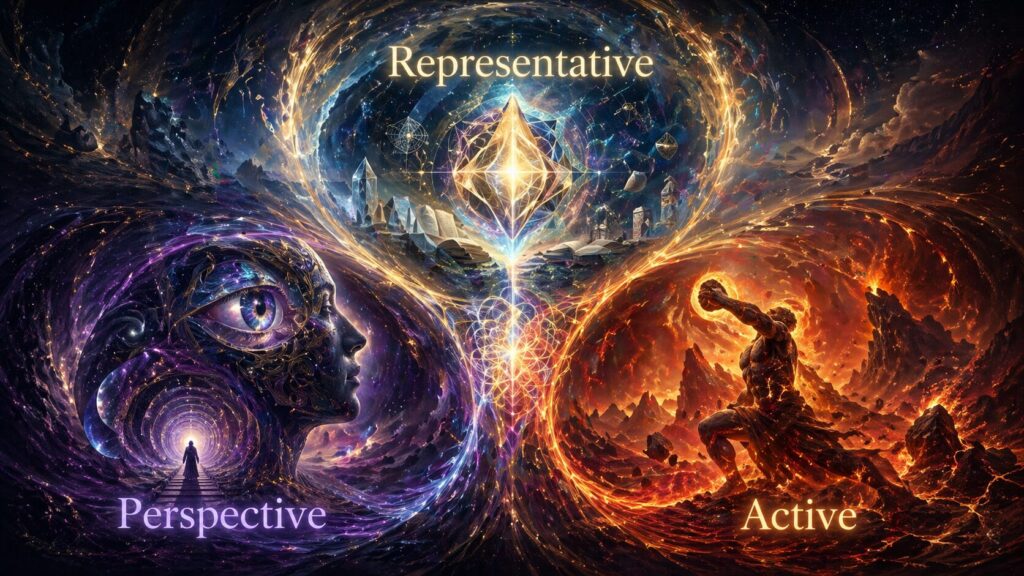
This edge is mediated by three complementary lenses, each fractal across scales:
- Representative — maps, models, theories, equations, names. The world made knowable through abstraction.
- Perspective — identity, observer, bias, intention, courage, meaning. The mysterious mediator between abstraction and reality.
- Active — action, work, systems, feedback, complexity, emergence. The world as it actually unfolds.
In their evolved forms, these three become Awareness, Intent, and Creativeness — the AIC triple-helix that runs through the Atlas of Worldly Wisdom and all the work in this ecosystem.
The Edge explains why the world resists our maps. The Atlas helps you build better maps and use them.
What you will explore
Uncertainty
Reality itself, not just our knowledge of it, refuses complete precision. From Bohr and Heisenberg to the dice at the bottom of the universe — and what this means for wise action.
Incompleteness
No sufficiently rich system of knowledge can fully close itself. From Gödel’s formal limits to Polanyi’s tacit knowing — and why every plan, theory, and identity has a hidden remainder.
Approximate Thinking
We do not handle reality directly; we replace it with usable models. B = A + E. Every approximation carries an error term — and learning to respect E is what separates wise thinking from clever thinking.
Beauty
Beauty is not decoration. It is a moving synchronicity — a click between expected knowledge, reality, and a mysterious set of preferences. A signal of pattern, fit, compression, and meaning.
Chaos & Complexity
Small inputs can produce large outcomes. Many simple interactions can produce surprising wholes. The interesting work — in nature, art, business, and life — happens at the edge of chaos.
Emergence & Fractals
New forms arise from many simple interactions. The same patterns repeat across scales. Causation runs both up and down — and all we can do is observe carefully and participate well.
How it connects to The Atlas of Worldly Wisdom
The two courses are designed as part of the same journey.
| The Edge of Knowledge course | The Atlas of Worldly Wisdom |
| Contemplative | Practical |
| Why the world is uncertain, layered, and plural | What to do under uncertainty, in real work |
| Uncertainty, incompleteness, chaos, emergence | Learning, planning, action, habits |
| “Why is the world like this?” | “What should I do now?” |
| Representative / Perspective / Active (the theoretical triad) | Awareness / Intent / Creativeness (the applied triple-helix) |
The Edge of Knowledge is the conceptual prelude. The Atlas of Worldly Wisdom is the applied map for action.
Intended Audience
The Edge of Knowledge will be most useful if you’ve spent a few years working seriously in any field that touches creativity, complexity, people, or change — and you’ve started to feel that something deeper is missing from the standard playbook.
More specifically:
Creators, writers, designers, and artists
If you care about beauty, originality, meaning, symbolism, creativity, and the hidden patterns behind great work — this course gives you a richer vocabulary for understanding how new things emerge.
Entrepreneurs, founders, and innovators
If you work with uncertainty, incomplete information, shifting systems, and unpredictable outcomes — this course explains why experimentation, plurality, and emergence matter.
Managers, professionals, consultants, and strategists
If your work involves people, systems, culture, learning, strategy, or change — this course gives you conceptual tools for navigating complexity without pretending the world is simpler than it is.
Educators, researchers, and academics
If you want a synthesized view across disciplines — physics, mathematics, philosophy, complexity, psychology, aesthetics — connected into one coherent worldview rather than scattered citations.
Lifelong learners, generalists, and ‘polymaths’
If you enjoy ideas from physics, mathematics, philosophy, psychology, complexity science, beauty, creativity, and culture — but want them connected into one meaningful picture — this course is for you.
Existing Atlas of Worldly Wisdom students
If you’ve worked through the Atlas and want the theoretical foundation underneath the AIC framework — this is that foundation. The same three-lens logic, traced back to its deepest sources.
A brief disclaimer
This is not a technical physics or mathematics course. It is not a productivity course. It will not make you Yoda.
It is a course for people who want to think more deeply about the world, act more wisely under uncertainty, and understand why creativity often begins where certainty breaks down.
If you want simple answers, this course may unsettle you. If you want better questions, better maps, and a richer way to think about knowledge, creativity, and action — welcome to the edge.
What is included in the Udemy course?
The Udemy version turns the Edge of Knowledge series into a structured learning experience.
It includes:
- 35 short lectures across 8 sections.
- Around 3 hours of focused video content.
- A guided sequence through the six foundational ideas.
- Downloadable background and reflection materials.
- Visual frameworks connecting the episodes.
- Links to related books, thinkers, ideas, and projects.
- A bridge into The Atlas of Worldly Wisdom and the wider Prometheus Shot ecosystem.
Part of a larger intellectual universe
The Edge of Knowledge is one doorway into a larger ecosystem of courses, books, essays, stories, and tools.
You may also want to explore:
The Atlas of Worldly Wisdom
The practical companion course. A system for integrating awareness, intent, and creativeness into meaningful, daily work.
Fuzzy on the Dark Side
A deeper exploration of Approximate Thinking — how useful models become prisons when we forget the error term they carry.
The Prometheus Shot
A creative-inspiration platform exploring great work, symbolic thinking, worldbuilders, artists, and innovators — Prometheus and Atlas are siblings.
Frequently asked questions
Do I need a background in science or philosophy?
No. The course introduces difficult ideas in a clear, non-technical, reflective way. It draws from physics, mathematics, philosophy, psychology, aesthetics, and complexity science, but it is not a technical course in any one of those fields.
Is this course practical?
Yes, but not in the shallow sense of “five tricks you can use tomorrow.” It is practical because it changes the way you understand uncertainty, planning, creativity, systems, and action.
For direct application, the course points naturally toward The Atlas of Worldly Wisdom.
How long is it?
The course contains 35 short lectures and can be completed in under 3 hours, with additional reflection materials for those who want to go deeper.
How is this different from The Atlas of Worldly Wisdom?
The Edge of Knowledge is the contemplative and theoretical foundation. The Atlas is the practical framework for learning, planning, and doing.
Who should take The Atlas instead?
If your main need is immediately practical — planning your work, building learning routines, clarifying priorities, designing habits, or shaping a personal knowledge system — start with The Atlas.
If you want the deeper worldview behind that system, start with The Edge.
Begin at the Edge
The world does not become clearer simply because that makes us more comfortable. The wiser move is to learn about where certainty fades, and how to think, create, and act when it does.
Start The Edge of Knowledge Course:
[Subscribe to Ether / Ethercast to receive the coupon]
Explore The Atlas of Worldly Wisdom: