Why more information, better plans, and harder work can still leave us stuck.
A disagreement about priorities can look like a shortage of facts. A lack of resources can look like a lack of motivation.
We respond by collecting more information, writing another plan, or working harder. Sometimes we are improving the wrong thing.
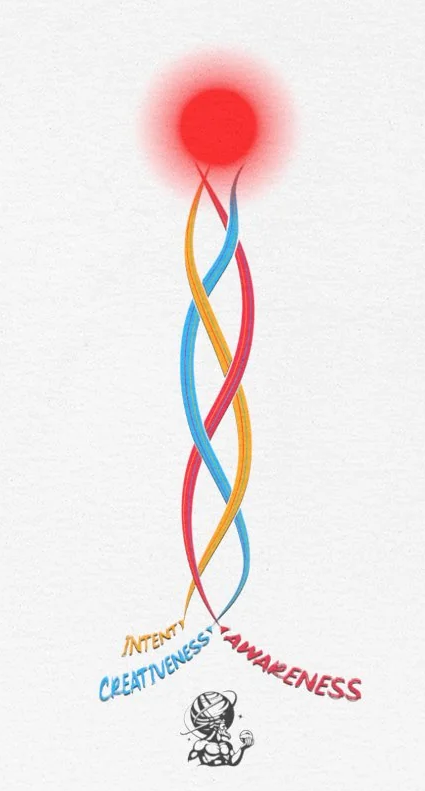
Awareness–Intent–Creativeness (AIC) is a framework that integrates what we understand, what we choose, and what we bring into the world. It offers a practical way to untangle complex problems, from a career decision to a struggling organization.
Awareness: What are we seeing, and what are we missing?
Knowledge becomes awareness when we can connect it, recognize its limits, and see what matters in a particular situation. A hundred saved articles may help less than one assumption we finally question.
Intent: What matters, to whom, and what are we willing to change?
Intent brings values, identity, judgment, and planning into a chosen direction. It includes the courage to commit, accept trade-offs, and reconsider who we need to become. People can agree on the facts while wanting very different futures.
Creativeness: What can we bring into existence?
Creativeness is the capacity to turn possibilities into something real: a useful service, a beautiful story, a functioning team, a different way of living. Skills, habits, resources, tools, and cooperation help make that possible.
Consider a team whose project keeps slipping.
More reporting might reveal a bottleneck: Awareness. But perhaps its members disagree about whether speed or quality matters most: Intent. Or they share the goal and understand the problem, yet lack the time, skills, or authority to deliver: the conditions for Creativeness need attention.
Each calls for a different response. The dimensions also interact: a small experiment may expose a mistaken assumption, change the team’s priorities, and reveal a better way to work.
That continuing interaction is why I describe AIC as a triple helix. Learning reshapes direction. Direction guides action. Action changes what we know and what we want.
Behind AIC is the broader Triadic View: the Representative dimension of models and knowledge, the Perspective dimension of identity and meaning, and the Active dimension of material processes and consequences. AIC carries this lens into practical life and work.
Try it on a stubborn problem. Think about these dimensions:
- What I understand, and still need to understand, is…
- What matters here, including to the other people involved, is…
- The next thing I can make, test, or change is…
Then look for a mismatch between your answers.
The Atlas of Worldly Wisdom develops this approach through connected tools for learning, planning, habits, and creative work. The Edge of Knowledge explores its conceptual foundations.
Where are you trying to solve a problem with more knowledge when it needs a choice, or more effort when it needs a better understanding?
Explore further:
When to learn and when to act.
Prefer stories and imagination? Check out the Map, the Bridge, and the Sculpture.