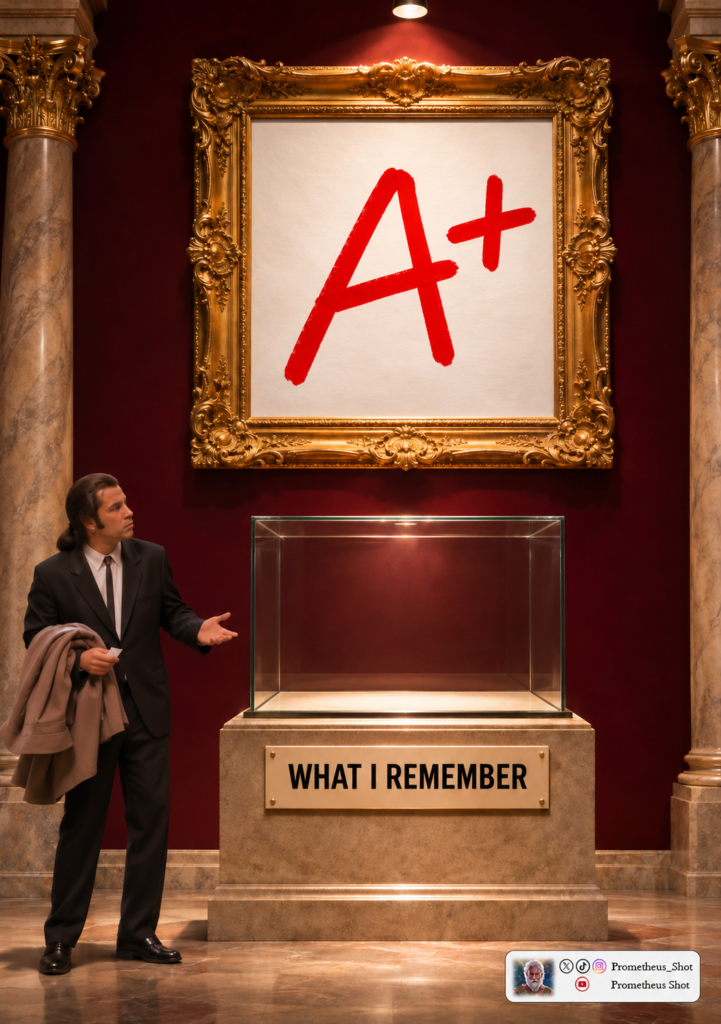
I see this in classes.
Some students study with one question in mind. Will this be on the exam?
But is this why you’re there: the exam?
Campbell’s law says that the more decisions depend on a number, the more pressure there is to game it. The pressure can change the very thing the number was supposed to measure.
In a classroom, that can happen without anyone cheating. Students rehearse the questions they expect. Teachers spend more time on what gets tested. The scores can rise even as the room for curiosity and experimentation shrinks. Donald T. Campbell, Assessing the Impact of Planned Social Change
Exams and quantification can reflect this idea of the corrupting measure.
At a pass mark of 60, a 57 and a 62 can (based on the educator’s exam-setting skill) mean different futures and almost the same understanding. I’ve written about what grades can tell us about teachers and what happens when passing thresholds drive the classroom. On Education · Why Schools (Universities) Kill Creativity
The same pressure can show up in innovation. If a lab is rewarded for patent counts, filing one more patent may pay off sooner than finding a use for the last one. The Global Innovation Index
B = A + E asks what the approximation (Grade = Knowledge + E ; Count = Innovation + E) leaves out. Campbell is reflecting a specific aspect of Fuzziness on the Dark Side B = A + E
A month after the exam, ask yourself what you can do now that you couldn’t do before.