Kate Crosby recovers a forgotten Buddhist tradition linking meditation, alchemy, medicine, and generative grammar. Its decline reveals how cultures lose integrated knowledge systems, and how political power shapes what counts as legitimate knowledge.
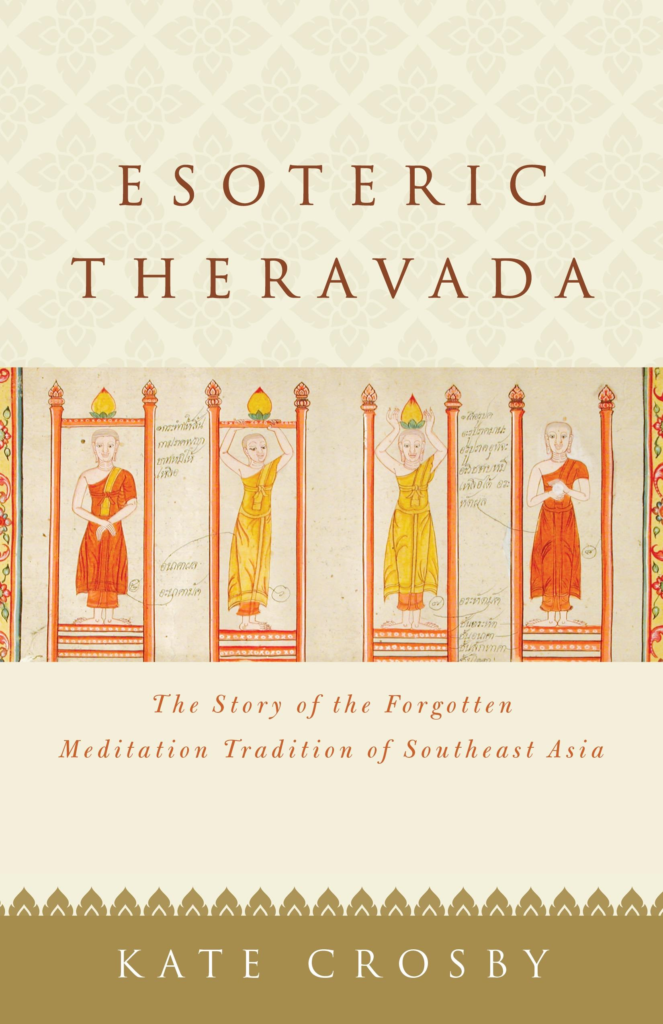
Reflections on Kate Crosby’s: “Esoteric Theravada: The Story of the Forgotten Meditation Tradition of Southeast Asia” (2020)
What disappears when a spiritual tradition is forgotten?
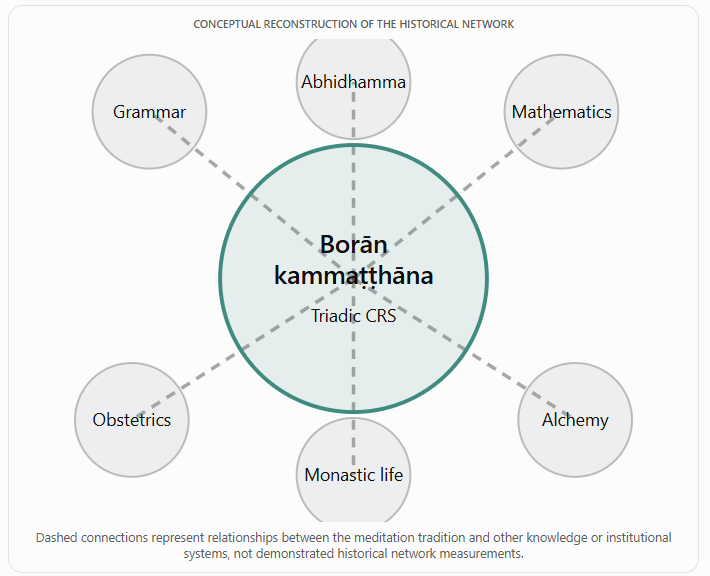
Kate Crosby’s fascinating Esoteric Theravada recovers borān kammaṭṭhāna, the “old meditation,” once widespread across Southeast Asian Theravada Buddhism. Far from an isolated mystical practice, it belonged to a remarkably integrated system of knowledge, connecting spirituality with causality, mathematics, generative grammar, medicine, obstetrics, and alchemy.
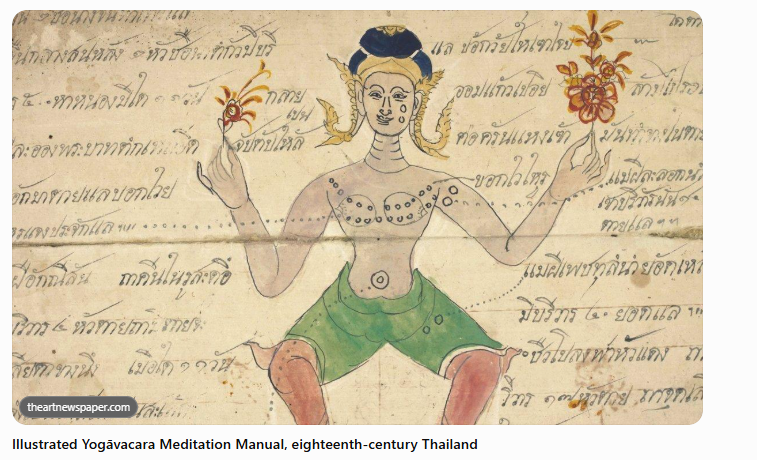
These were interconnected technologies of transformation. Just as alchemy sought the purification of metals, meditation sought the transformation of the practitioner. In extraordinary visualization exercises, luminous forms and sacred syllables were drawn into the body, sometimes into an imagined womb, where an enlightened being would gradually take shape. The gestation of a child, the purification of matter, and the cultivation of consciousness reflected related understandings of generation and change. Even language (pali in this case, comparisons to sanskrit) was understood as generative, its syllables and rules participating in transformation rather than merely describing reality.
What modern knowledge separates into disciplines was here part of a more integrated worldview, woven into religious practice, healing, and everyday life.
Yet the gradual disappearance of this tradition reveals something equally fascinating about the relationship between knowledge, modes of knowing, and power. Colonialism, Cartesian divisions of mind and body, Western scientific paradigms, political movements, and indigenous Buddhist reforms progressively undermined its legitimacy. New movements, including modern Vipassanā, emerged as rationalized restorations of an allegedly purer Buddhism, while older practices became associated with superstition or corruption. Political authority, monastic institutions, and later revolutionary upheavals further shaped what could survive.
To me, Crosby’s beautiful interdisciplinary exploration was a reminder that counts as legitimate knowledge is inseparable from the historical and political conditions under which knowledge is produced and judged.
The tradition’s decline also offers a compelling example of the evolution of Cultural Resource Sets (CRS). A living cultural system is a network of material practices, shared representations, and perspectival identities. Borān kammaṭṭhāna weakened as its connections with surrounding / neighboring cultural resource sets and traditions eroded, reflecting a weakening of its creative potential (FMA). Its internal dimensions fragmented: practices disappeared, symbolic meanings became unintelligible, and institutions and practitioners shifted their allegiances. Its survival as scattered texts or rituals was no longer sufficient to sustain the integrated system. A sufficient degree of integration (identities+knowledge+practices) is essential for the CRS to remain alive or to assert its independence.
A cultural tradition can become extinct before its last artifacts disappear: Losing the network of meanings, practices, and identifications that once made those artifacts part of a living world.
Perhaps the deepest question Crosby raises is not simply what ancient knowledge we have forgotten, but how much we have lost through changing the very ways in which we recognize knowledge.