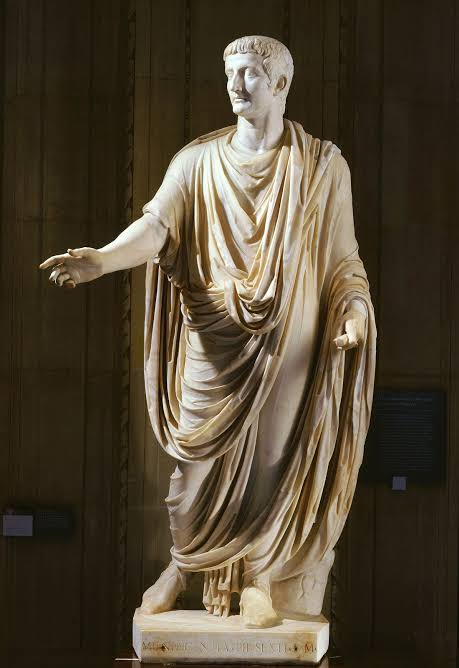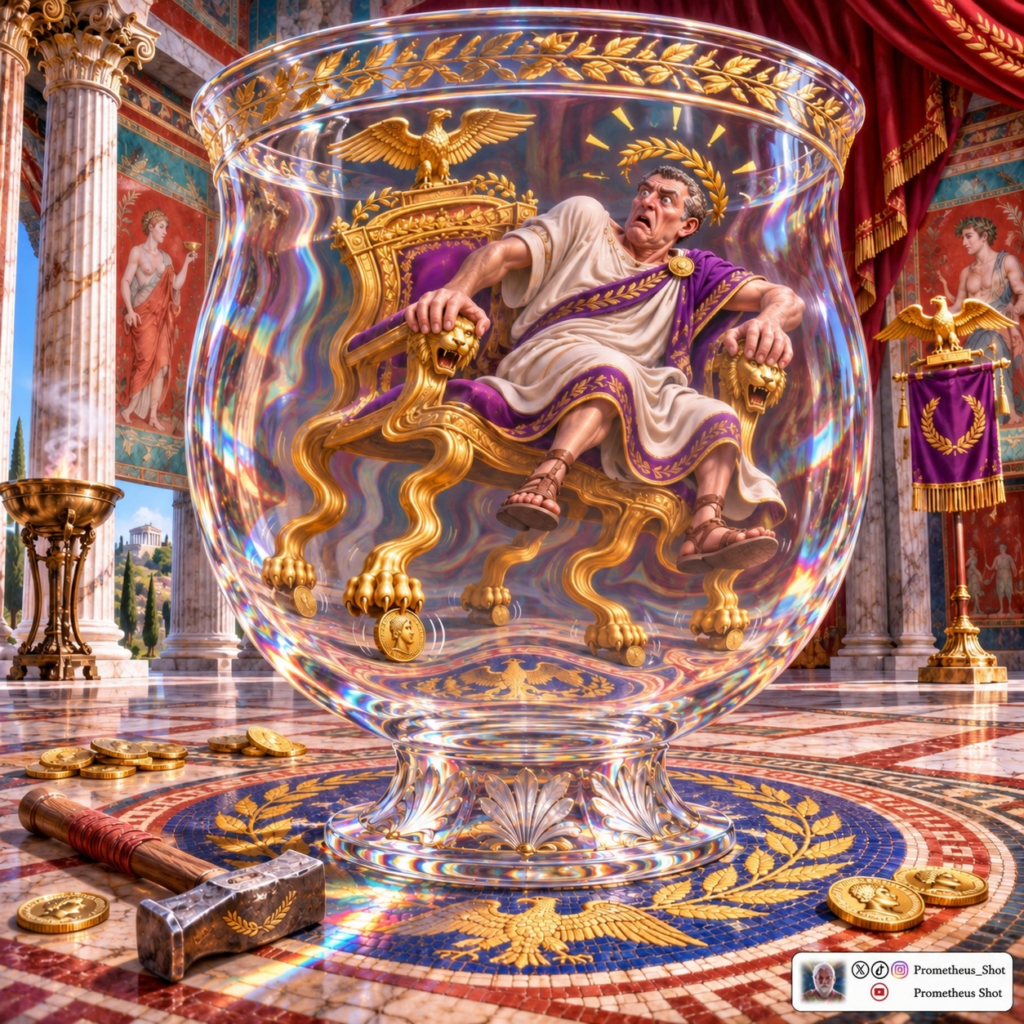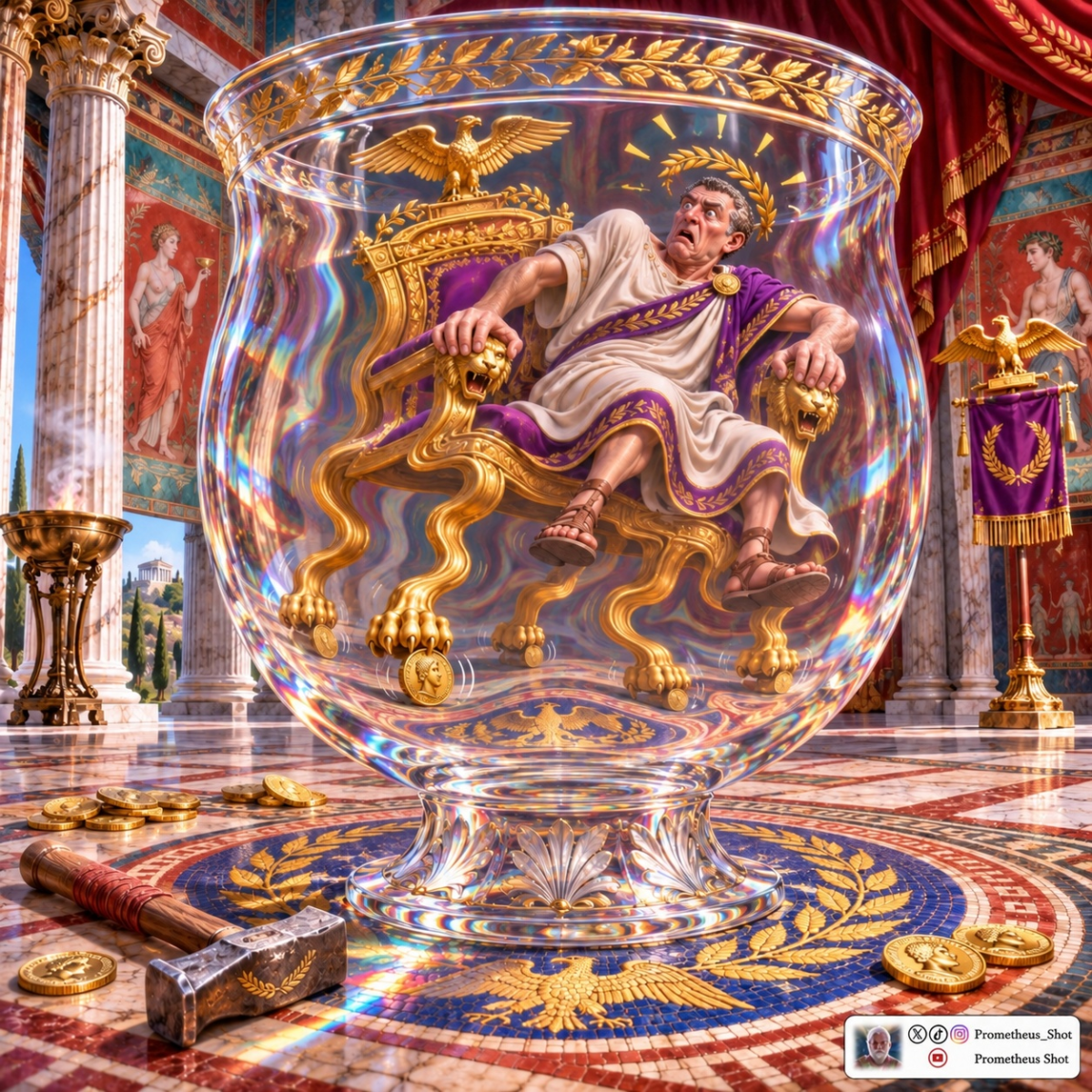
An ancient story, recalled in Acemoglu and Robinson’s Why Nations Fail, tells of a craftsman who brought Emperor Tiberius a remarkable glass vessel. When thrown onto the floor, it dented instead of shattering. The craftsman took out a small hammer and restored its shape.
He expected a reward. The emperor asked whether the craftsman had shared his invention with anyone. The answer was No.
The craftsman was executed. In another account, his workshop was destroyed to protect the value of precious metals.
This combines details from two ancient sources.
The story and its uncertainty. In Petronius’s Satyricon, chapter 51, the emperor is simply Caesar. After the demonstration and the fatal question, the narrator explains the execution: if the invention became known, “we would think no more of gold than we would of dirt.” This is a story told within a work of fiction.
Pliny’s Natural History, 36.195, names Tiberius and describes the destruction of the workshop, fearing depreciation of copper, silver, and gold. He does not describe the execution. He also adds a qualification worth preserving:
“Such is the story, which, however, has for a long period been current through frequent repetition rather than authentic.”
We cannot establish that this happened. We can examine the fear the story expresses.
Useful to whom? The craftsman sees a material with extraordinary possibilities. The emperor sees existing wealth losing value, and instability caused by people losing their privilege. The same invention appears as an achievement from one position and a threat from another.
An invention needs somewhere to go. Acemoglu and Robinson draw attention to the inventor approaching the emperor for a reward. The scene places the future of a technical discovery in the hands of a powerful patron.
It invites a practical question about institutions: what other routes does an inventor have? Customers, collaborators, investors, workshops, and protections against arbitrary punishment can give an idea several chances to survive. Dependence on one gatekeeper makes one refusal decisive.
The balance of power enters the workshop. Innovation changes the value of existing skills, assets, and arrangements.
This is where creativity meets empire. The power to govern includes decisions about which possibilities receive support, which may circulate, and which are denied a future.
The story leaves us with a question that reaches well beyond ancient Rome: who has the power to decide what the rest of us are allowed to make possible?