What connects knowing the world, caring about it, and making something worthwhile?
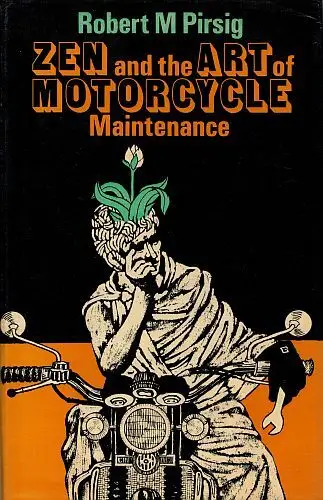
I delayed reading Robert M. Pirsig’s book because of what I assumed about the “motorcycle” bit. When I finally listened, I spent much of the journey in surprise and appreciation: appreciation for the beauty, sharpness, and breadth of his observations; surprise at their proximity to my own triadic perspective.
Very few are the books with such power, insight, and imaginative energy… This book is a great recommendation with extremely high ‘Creativeness’ (cultural phi = breadth x integration). The story (fictionalized account of his own experiences) is both moving and deeply insightful. His reflections on taking a motorcycle trip, and interactions with people, are fascinating and captivating.
Philosophically, what mattered to me the most was quality and the three.
The author frequently pauses around a mysterious ‘Quality’. Pirsig’s Quality names something we encounter before we divide experience into subjects and objects. His inquiry brings analytical understanding and immediate appreciation into conversation, then grounds that conversation in craftsmanship: the care through which understanding becomes good work.
Especially striking was his exploration of mind, matter, and Quality, including his observation that “three is an awkward number.” He explicitly considers a trinity, although his argument subsequently moves toward Quality as the source of both mind and matter, and the way I like to think about it has no order, and the trinity itself is omnipresent in the world (OTS).
I repeatedly recognized something close to Intent, the mysterious, transformative dimension within Awareness–Intent–Creativeness (Explanation, The Atlas). Yet the correspondence is incomplete. At several points I wanted to pause: have Awareness and Intent become entangled here? That is a question for closer examination.
The book opens a promising dialogue: how might distinguishing understanding, being, and making clarify what Pirsig gathers under Quality? And how might his attention to care and craftsmanship deepen that distinction?
I intend to return to these questions, alongside a wider conversation with traditions such as Taoism, exploring where our perspectives converge and what their differences reveal.
Connections
- The Edge of Knowledge: the triadic view, mystery, and the limits of abstraction.
- The Atlas of Worldly Wisdom: Awareness, Intent, and Creativeness in practice.
- The Great Work Matrix: understanding, personal vision, and meaningful creation.
- Pirsig on Quality: an excerpt containing the “awkward three” passage.